 Xpense
The 50/30/20 rule splits your take-home pay into three buckets: 50% for needs, 30% for wants, and 20% for savings and debt repayment. It is popular because it is easy to remember. It is also built around assumptions that do not always hold here, so it works best as a starting point, not a verdict.
1. Define the buckets for your life
Needs are what you cannot skip: rent, groceries, utilities, insurance, EMIs, school fees. Wants are the rest: dining out, shopping, subscriptions, travel. The line is yours to draw, and being honest about it matters more than where exactly you put it.
2. Expect your needs to run higher
In a high-rent city, or with an EMI and family support, needs can easily pass 50%. That does not mean the rule has failed. It means you adjust: 60/20/20 or 55/25/20 can be a realistic plan, as long as the savings share stays protected.
3. Protect savings first
If you have to squeeze one bucket, squeeze wants, not savings. Moving the savings share out on payday keeps it from being spent by default.
4. Check against what you actually spent
A budget is only useful if you compare it with reality. At the end of each month, look at where the real numbers landed against the plan. The categories that regularly overshoot are where the plan, not your discipline, needs changing.
5. Revisit it when life changes
A raise, a new EMI, a move or a new baby all shift the split. Reviewing every few months keeps the plan matched to the life you are living, not the one you had when you set it.
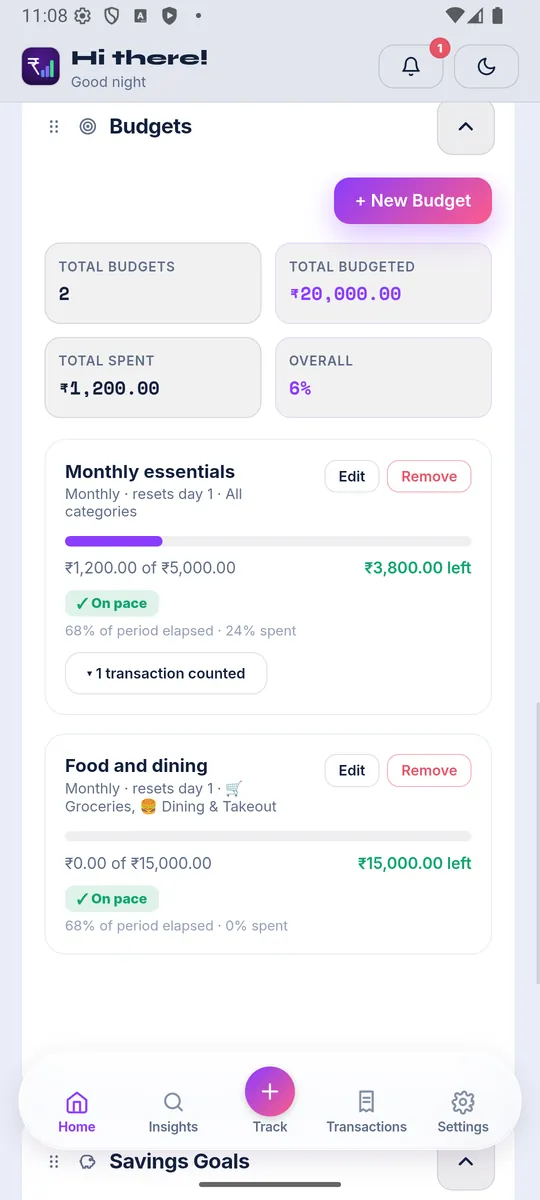
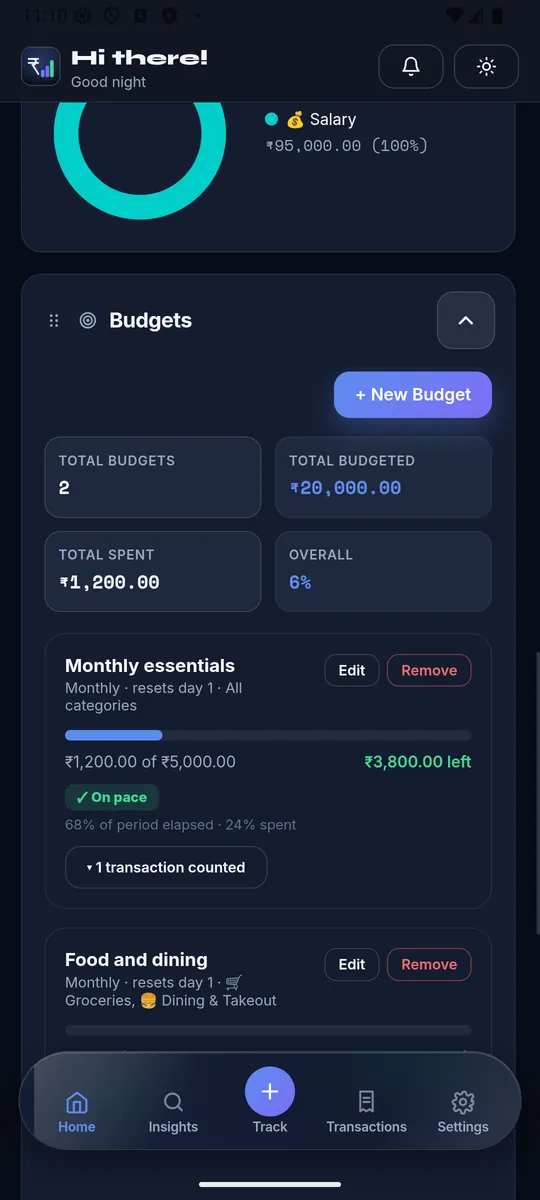
XpenseAI's Budgets lets you set a limit per category and shows your actual spending against it as the month goes. See how it works or get started free.