 Xpense
An emergency fund is money set aside for the things you cannot plan: a job gap, a medical bill, a sudden repair. The usual advice is to hold three to six months of expenses. That number feels out of reach until you break it into steps.
1. Start with your real monthly expenses
The target is built from what you actually spend on the essentials, not your income. Rent or EMI, food, utilities, insurance, school fees, minimum card payments. Add those up from your own records and you have the number the fund has to cover, instead of a guess.
2. Begin with one month
Three to six months is the destination, not the first step. One month of essentials covers most small shocks and is reachable quickly. Hitting a first milestone makes the habit stick far better than staring at a large target.
3. If your income varies, aim for more
Freelancers and anyone with irregular income face bigger swings, so a longer cushion makes sense. Six months or more is a reasonable target, and it also lets you smooth out the lean months without touching long-term investments.
4. Keep it separate and easy to reach
The fund should be somewhere you can get to quickly, such as a savings account or liquid fund, and separate from everyday money so you do not spend it by accident. Safety and access matter more than return here.
5. Automate the top-up
Move a fixed amount the day your income arrives. Whatever is left is what you spend. Saving what remains rarely works, because there is rarely anything remaining.
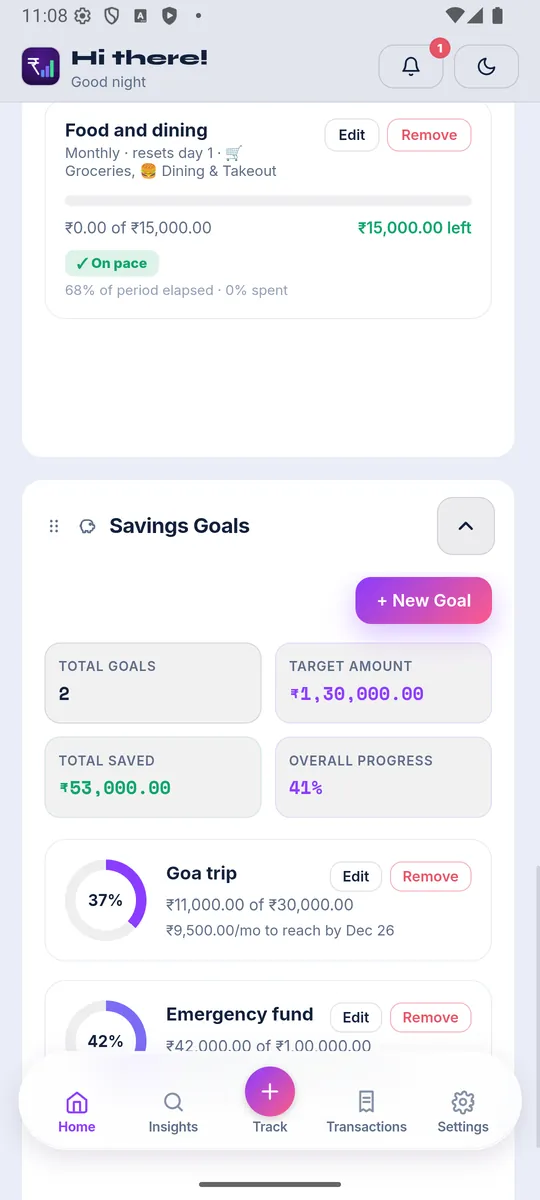
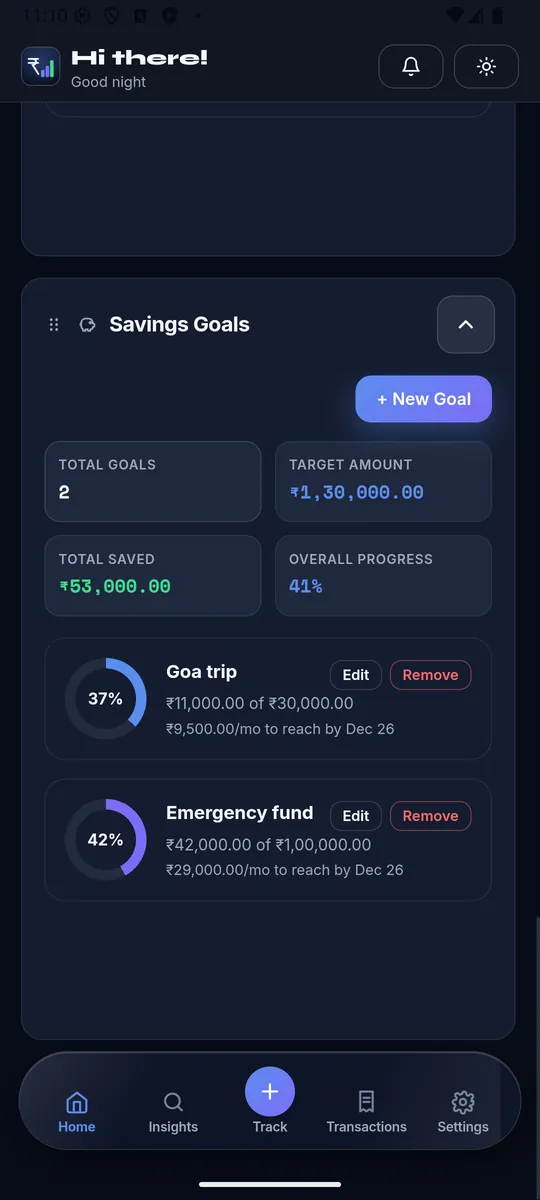
XpenseAI's Savings Goals lets you set a target, track progress toward it, and see how your monthly spending affects how soon you get there. See how it works or get started free.