 Xpense
A home loan feels simple: pay the same EMI every month until it is gone. But the number that matters is not the EMI, it is how much you still owe, and that moves in a way that surprises most people the first time they look at it.
1. Early EMIs are mostly interest
On a reducing-balance loan, each month's interest is calculated on what you still owe. At the start, you owe the most, so interest takes the largest share of the EMI and very little goes toward the principal. Over the years the split flips. This is why the outstanding balance drops slowly at first, then faster.
2. A worked example
Take a ₹50,00,000 loan at 8.5% a year. The monthly rate is about 0.708%, so the first month's interest is roughly ₹35,400. If your EMI is about ₹43,400, only around ₹8,000 reduces the principal. The same EMI, many years later, can be mostly principal. The EMI did not change; the balance it is charged on did.
3. What a prepayment does
A part-payment goes straight to principal, with no interest portion. Because every future month's interest is calculated on a lower balance, the saving compounds. You can usually choose between a shorter tenure with the same EMI, or a lower EMI with the same tenure. Shortening the tenure saves more interest overall.
4. Timing matters more than size
A prepayment in year two is worth far more than the same amount in year fifteen, because it removes interest for many more months. If you can only prepay occasionally, earlier is the better habit.
5. Keep your own record
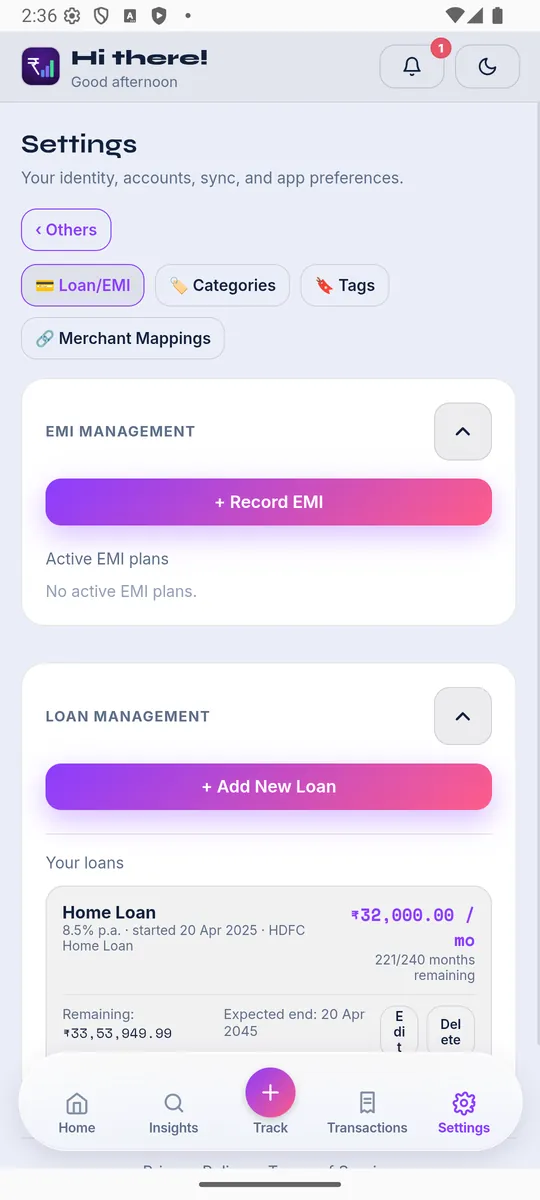
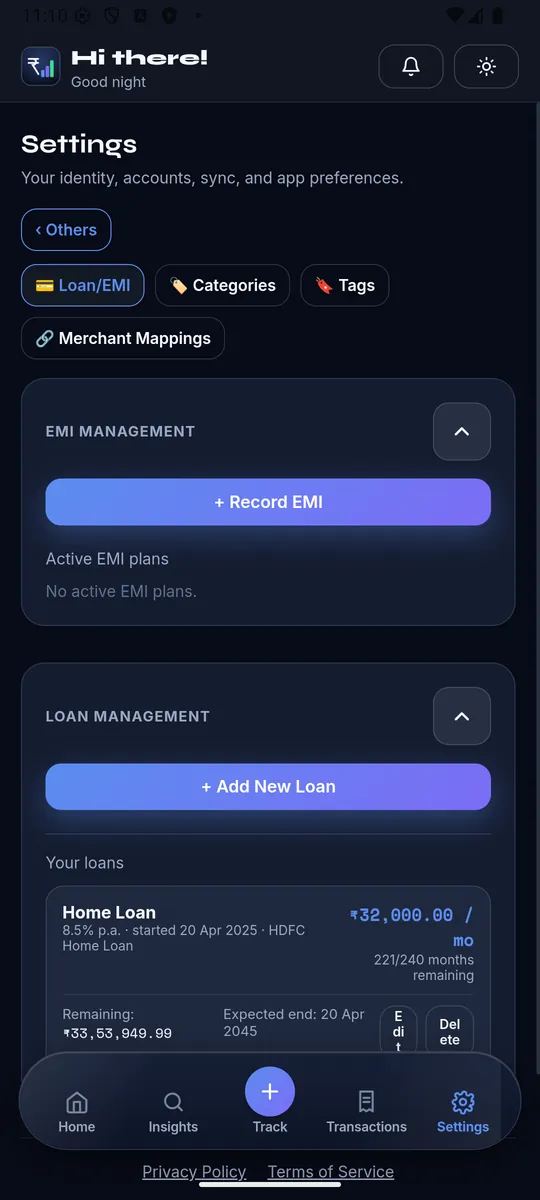
Banks send statements, but they do not show the whole story in one place. Keeping your own record of each EMI, the interest and principal split, and each part-payment lets you see the balance the way the schedule says it should be, and spot a mismatch early.
XpenseAI's Loans tracks each EMI with its interest and principal split, records extra payments, and shows your outstanding balance as it stands today. See how it works or get started free.