 Xpense

Most first budgets fail for the same reason: they begin with what you think you should spend. A budget that works begins with what you actually spend, and only then asks what you want to change.
1. Look at the last two or three months
Pull up your bank and card statements and add up where the money went. Do not judge it yet. You are collecting facts, not grading yourself. Most people are surprised by at least one category.
2. Group spending into a few buckets
Eight to twelve categories is plenty: rent, groceries, transport, bills, eating out, shopping, health, and a catch-all. More than that and you will stop maintaining it.
3. Set limits from real numbers
Take each category's average from the last few months and trim a little where you want to spend less. A limit ten percent under reality is a goal you can hit. A limit half of reality is one you will abandon in week two.
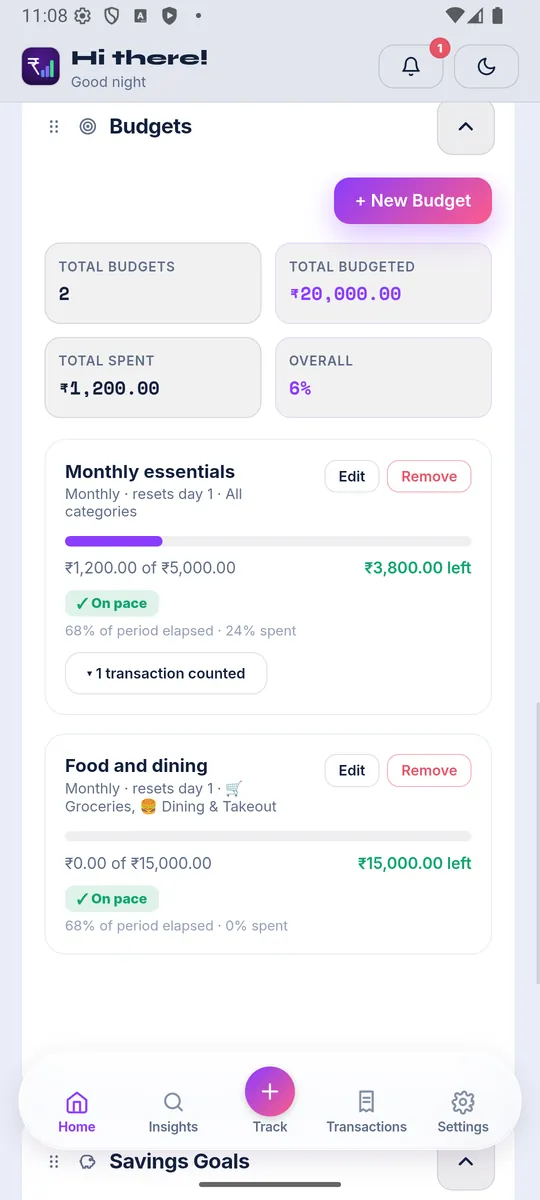
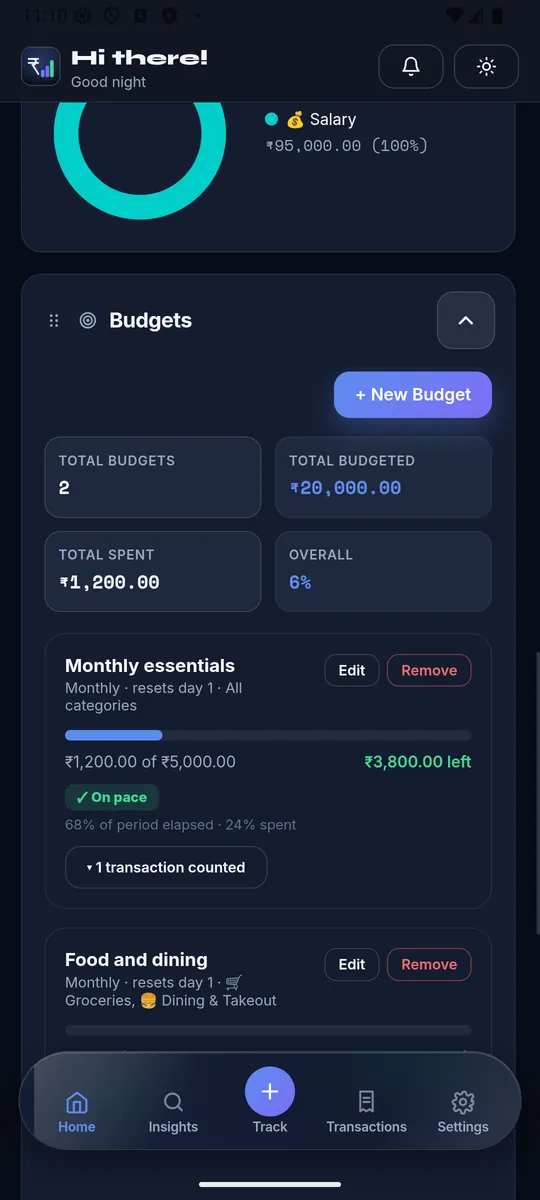
4. Check in weekly
A budget only works if you look at it. Five minutes once a week, comparing spending so far with the limit, catches an overshoot while there is still time to adjust.
5. Expect to revise it
Your first budget will be wrong in places. That is normal. After two or three months you will have a plan that matches your actual life.
XpenseAI's Budgets lets you set a limit per category and shows your actual spending against it as the month goes. See how it works or get started free.