 Xpense
Do the math on manual expense tracking honestly and it stops looking like a 5-minute-a-day habit. A typical person with a bank account and one or two cards generates somewhere between 60 and 150 transactions a month — UPI payments, card swipes, auto-debits, the occasional cash withdrawal. Logging each one by hand, even quickly, costs real time that adds up to hours every month, not minutes.
Where the time actually goes
It's rarely the typing itself that's slow. It's everything around it: opening the app when you're mid-errand, remembering the exact amount after the fact, guessing at a category, and the statement-reconciliation slog at the end of the month when you try to figure out what you forgot to log. That last part is the expensive one — cross-checking a PDF statement against whatever you remembered to type in is exactly the kind of task that eats an evening and still leaves gaps.
The three places automation saves real time
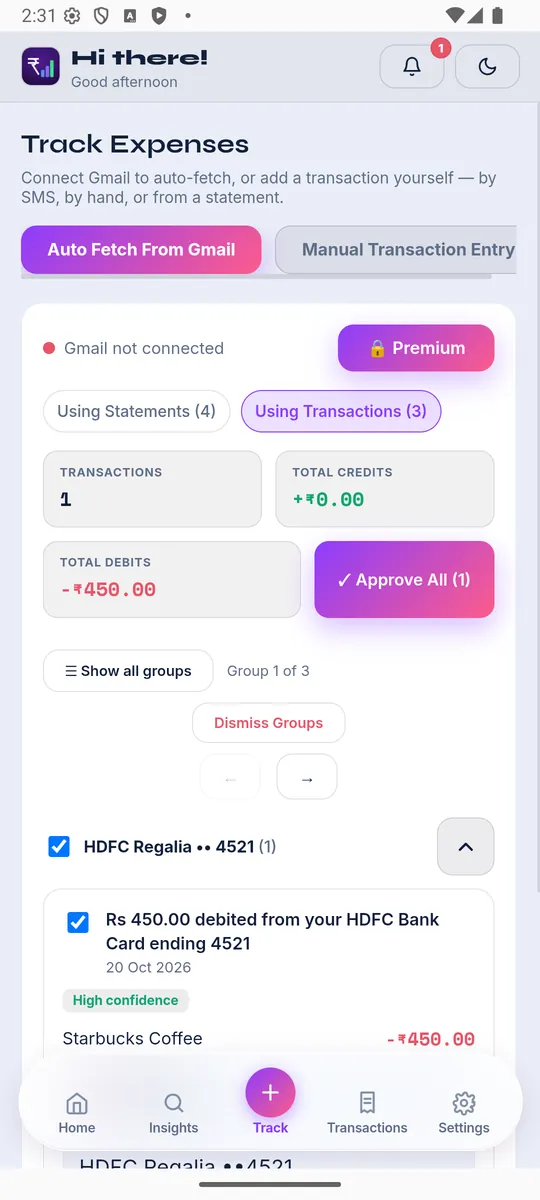
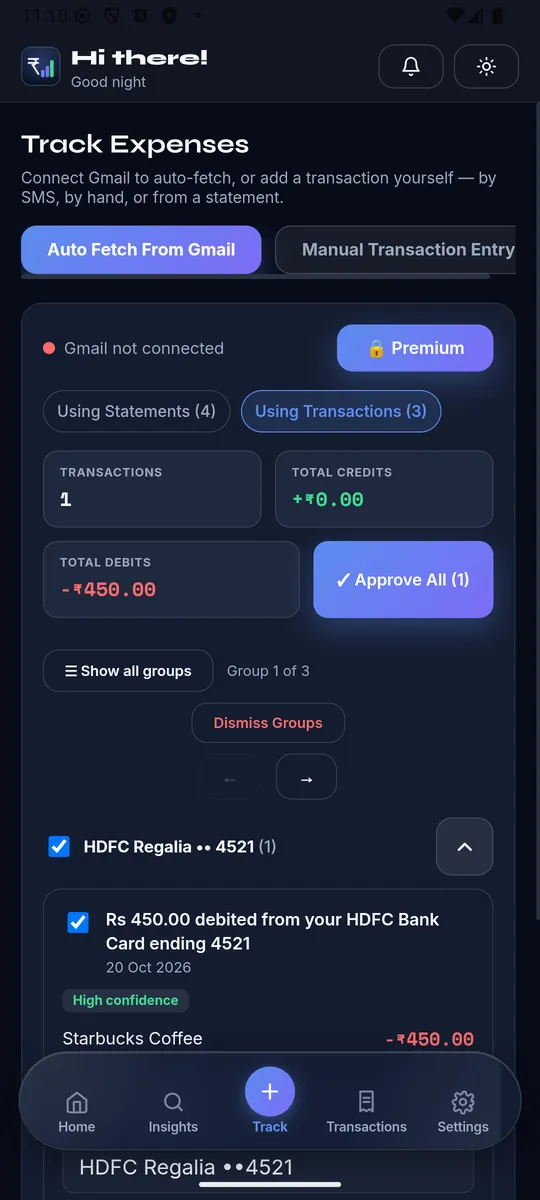
- Entry. If your tracker reads the transaction-alert emails your bank already sends, most of your spending is logged the moment it happens — not when you remember to open an app. This is the single biggest time saver, because it removes the step entirely instead of making it faster.
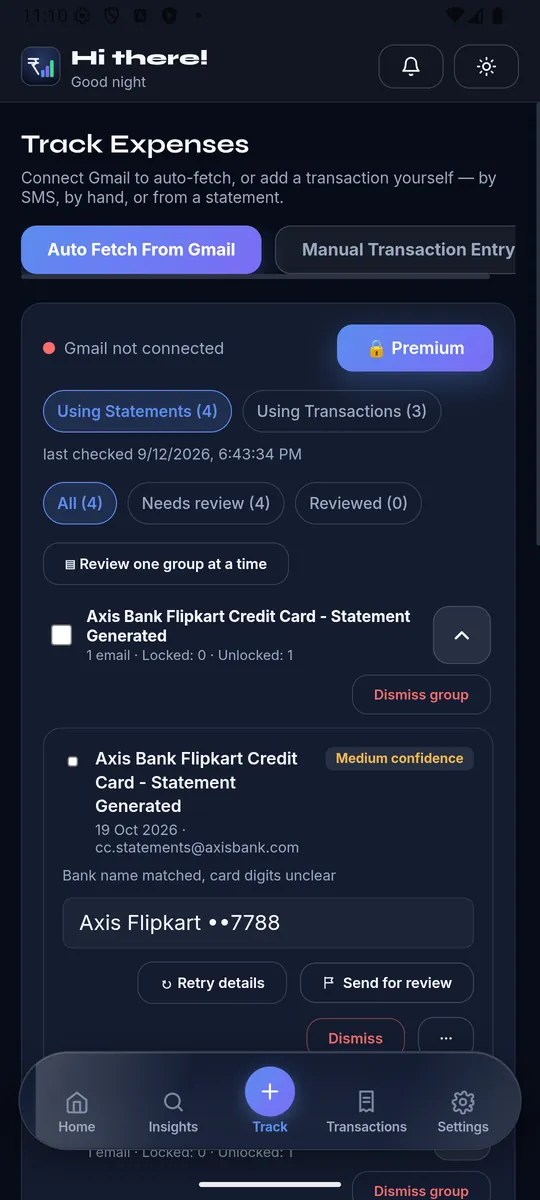
- Statement reconciliation. A tracker that can open your password-protected monthly statement and automatically compare it against what's already tracked turns a once-a-month hour of manual checking into a two-minute review of the handful of mismatches it actually found.
- Categorization. Learning that "AMAZON PAY" from you is usually Shopping and not Bills means you stop re-deciding the same thing every month — a small saving per transaction that compounds fast at 100+ transactions a month.
What manual entry is still fine for
Automation isn't the goal for its own sake — cash payments, informal loans between friends, or a one-off transaction with no digital trail still need a quick manual entry, and that's fine. The goal is making sure manual entry is the exception, not the default path for every single transaction you make.
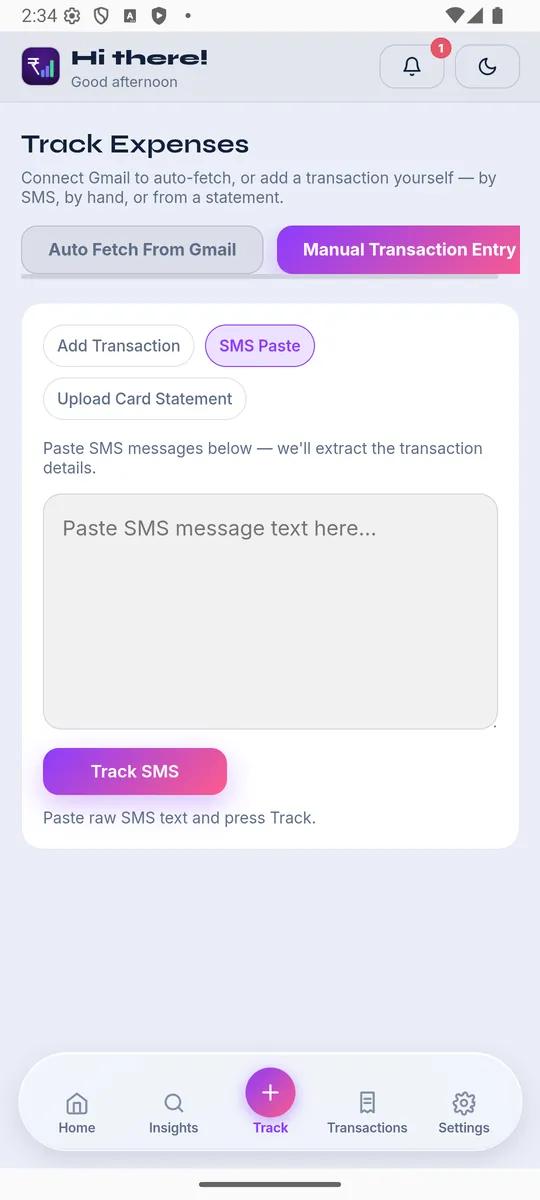
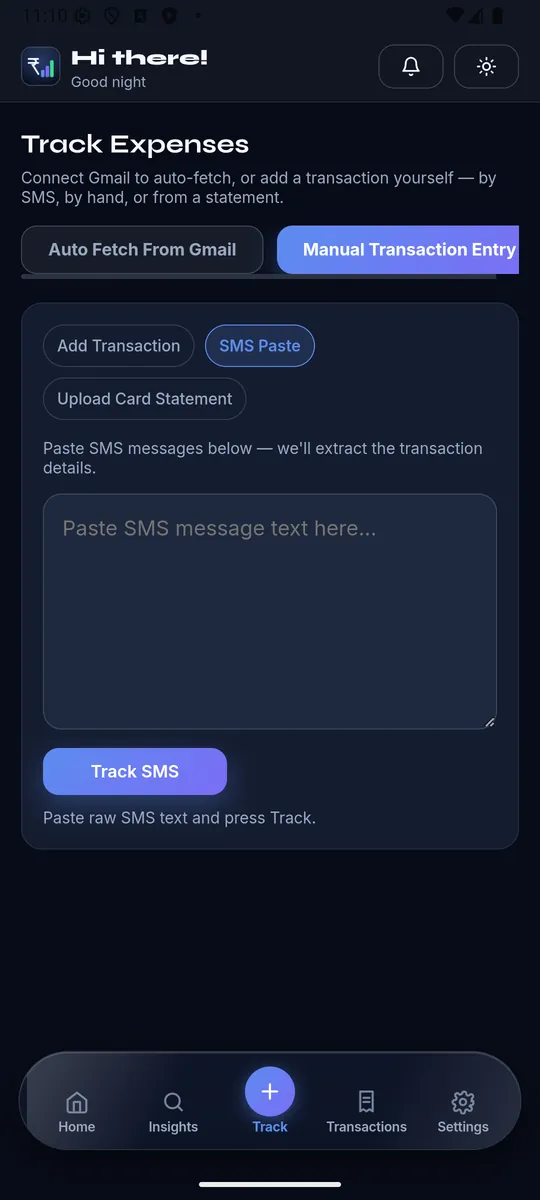
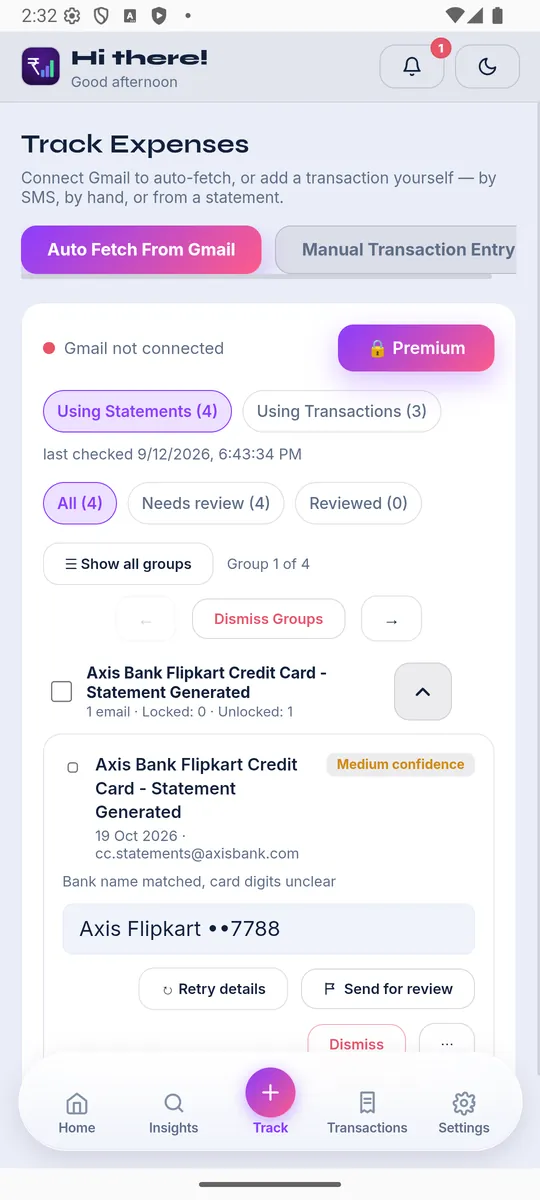
If you're spending more than a couple of minutes a day on tracking, the problem usually isn't your discipline — it's that too much of your spending is still going through the slow, manual path when most of it has a digital paper trail that an app could be reading automatically.
XpenseAI reads your bank and card statements and transaction-alert emails automatically, including password-protected PDFs, and reconciles them against what's already tracked — so most months need just a quick review, not a rebuild. See exactly how it works or get started free.